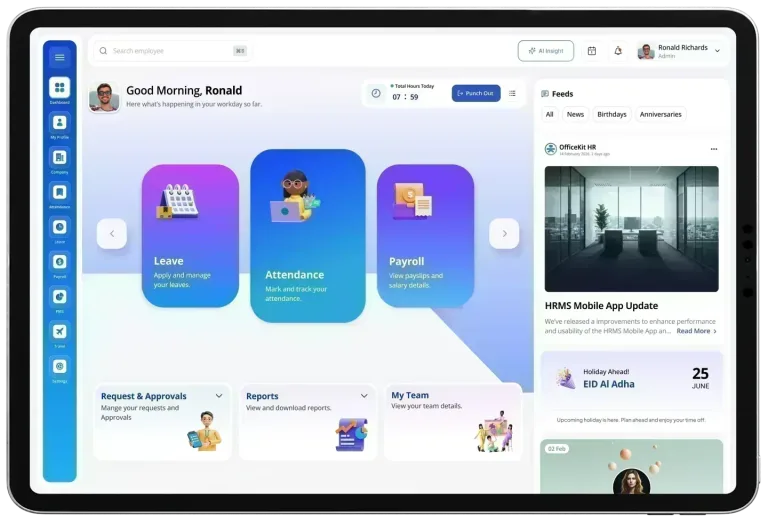
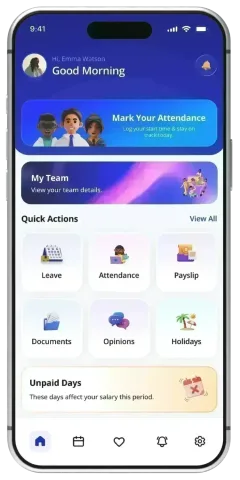
What an ESS portal does for an Indian workforce
Most HR teams in India spend a large share of their week on the same requests: a copy of last month's payslip, a leave balance, a missed punch, a salary certificate for a bank loan, a change of address or bank account. An employee self-service portal moves those requests to the employee. Each person signs in, sees their own records and raises a request that goes to the right approver. HR stops acting as a help desk and spends its time checking exceptions instead.
Payslips and HR letters
Employees can download monthly payslips at any time, including older months they need for loan or visa applications. Employment and salary letters are available in the same place, so employees do not need to email HR for standard documents such as a salary certificate for a bank or an employment letter for a rental agreement.
Leave and attendance, including regularisation
Employees see their leave balances by type, apply for leave and track approval. Leave entitlements in India depend on the company's policy and the state's Shops and Establishments rules, so the portal shows balances exactly as HR has configured them for each location. When an employee misses a punch or works from a client site, they raise an attendance regularisation request instead of emailing HR, and the manager approves it. Approved leave and attendance flow into the month's payroll, which removes a common source of salary corrections.
Mobile access for field and shift staff
Many Indian workforces are not at a desk: sales teams, technicians, retail and plant staff. OfficeKit HR's iOS and Android apps give them the same self-service on their phone, including geo-tagged check-in, leave requests and payslip access. Managers can approve requests from the app, so a leave application does not wait until someone is back at a laptop.
Claims, profile updates and documents
Employees submit expense and reimbursement claims with receipts attached, and see where each claim is in the approval chain. They can update personal details such as address, emergency contact and bank account, and upload documents such as ID proofs or certificates. Changes that affect payroll, such as a new bank account, should go through an approval step before they take effect.
Who sees what
An ESS portal holds salary, bank and identity data, so access needs to be narrow: employees see only their own records, managers see what they approve for their team, and HR and payroll see what their role requires. Every change should be recorded, so it is clear who changed a bank account or approved a regularisation. OfficeKit HR's approach to data protection is described on its security page.
Rolling out ESS in an Indian company
Set up leave policies by location and load opening balances first, so the numbers employees see on day one are right. Publish payslips for the past few months, so the portal is useful immediately. Start with payslips, leave and attendance, then add claims and profile changes. Announce it with a short guide in English and, if useful, a regional language, and track how many routine HR requests arrive by email before and after launch.